
# Maintenance of the Off-center Tool Maintaining the **off-center tool** (décentreur) is essential to ensure its proper functioning, precision, and longevity. Here are the key steps for its maintenance: ### 1. Regular Cleaning * **Remove residue:** After each use, clean the tool to remove dust, metal shavings, or any other debris. * **Use appropriate solvents:** Clean the surfaces with a dry cloth or a mild solvent to prevent the buildup of grease or dirt. ### 2. Lubrication * **Movable parts:** Regularly apply a few drops of fine oil or a specific lubricant to the joints and rotating parts to ensure smooth movement. * **Protection against corrosion:** If the tool is made of steel, apply a light coat of anti-corrosion oil to prevent rust, especially if it is stored in a humid environment. ### 3. Periodic Inspection * **Check for wear:** Inspect the tips, jaws, or contact surfaces for signs of deformation or excessive wear. * **Verify alignment:** Regularly check that the tool maintains its precision. A misaligned off-center tool can lead to errors in centering or machining. ### 4. Storage * **Protective case:** Store the tool in its original case or a dedicated box to protect it from shocks and dust. * **Dry environment:** Ensure it is stored in a dry place to avoid oxidation. ### 5. Adjustments and Calibration * **Re-calibration:** Depending on the frequency of use, have the tool calibrated by a professional or use standard gauges to verify its accuracy. * **Tightening:** Check that the screws and fastening components are properly tightened, but avoid over-tightening to prevent damaging the threads. By following these maintenance practices, you will guarantee the **reliability** of your off-center tool and optimize your technical operations.
with Boubakar Traoré

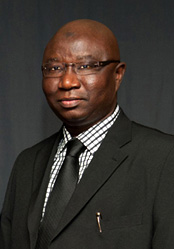
Boubakar TRAORE, President and Founder of Afro-Médiation: "Young people must be catalysts for development initiatives"
At the helm of the Canadian group Afro-Médiation—specialized in commercial mediation, event management, training, and more—Boubakar TRAORE belongs to that breed of managers always guided by innovation, who know how to instill dynamism, creativity, and determination in their collaborators. For him, success is above all a matter of self-perception and personal conviction. He urges young Africans to shed afro-pessimism and establish themselves as true icons of development through a sense of responsibility and a culture of results. Rich in experience, he lifts a corner of the veil in this interview on Afro-Médiation (www.afromediation.com) and the ambitions he holds for Africa.
According to Chinese wisdom, "the longest journey begins with a single step." How was the idea for Afro-Médiation born? What motivated you to create this institution based in Canada?
The birth of Afro-Médiation was inspired by an ideological revolution whose goal was to encourage and bequeath a series of synergies and creative services capable of meeting the real needs of current generations without compromising those of generations to come. The demystification of access to training, the bringing together of peoples and cultures, and the mastery of conflict resolution and tension-easing techniques were among the many motivations behind its creation.
Why the name "Afro-Médiation"? What is the philosophy behind this name?
The name Afro-Médiation is the logical progression of an analysis of Africa's fundamental conflictual and professional needs. The African Mediator must work on behalf of organizations disadvantaged by communication systems and individuals sidelined by a lack or insufficiency of professional information. They must propose solutions to problems related to accessing innovative resources and help professional communities acquire working tools through agreements.
What are your sectors of intervention, and concretely, what services do you offer to those who call upon you?
Collectively or individually, for both the public and private sectors, we provide a comprehensive service focused on support, analytical and conceptual assistance for companies, intra-community and international exchanges, legal and financial affairs, risks related to commercial practices, and barriers to business development in African markets (lack of knowledge regarding cultural impact on business, constraints induced by distance and their repercussions on logistics, etc.).
We offer those who call upon us tools that meet their expectations regardless of the complexity of their situation, thanks to our expertise which relies on organizations, experts, and specialists whose sole concern is progress.
Many organizations operate in the same field as you. What makes Afro-Médiation unique?
We certainly share common technologies with other structures, but in terms of distinctiveness, Afro-Médiation has different terminologies and approaches thanks to its real-world knowledge and high-performance tools. This is the foundation of our success. There is a difference between reputation and merit. The former is based on what others think of you, while the latter is based on your own actions, knowledge, behavior, and realities.
You operate worldwide. How are your different teams managed?
Technological evolution and ideological sharing are two important elements in this management. Everything is a matter of coordination and motivation. We consider Afro-Médiation as a small country. Therefore, the institution is administered like a country. We have coordinators and delegates across the world, much like diplomatic missions accredited by a government. Afro-Médiation, as the government, is committed to providing the support and tools necessary to ensure the best possible development. The responsibility lies with each collaborator to ensure that all their duties translate into a work environment capable of supporting our objectives.
Tell us about your many experts. What are their profiles?
To respond favorably to the needs of our public and humbly accomplish our mission, we are very selective in our choice of experts and organizations. They must possess international knowledge and key elements that meet the requirements of international competitiveness. They must be capable of ensuring the development and success of companies in accordance with our founding values: commitment, integrity, diversity, humility, and knowledge. Their work must prioritize benevolence, listening, and follow-up.
What are Afro-Médiation's greatest achievements in terms of mediation?
At this stage, we have a well-established track record. But we do not wish to sing our own praises. We prefer to let others judge. However, we are very happy with the validity of our project. We are also honored by our contribution to several events, the support we receive, and especially the specific attention paid to our institution.
In your opinion, what qualities should a good mediator possess?
In a logical sense, the mediator must be neutral, loyal, independent, impartial, and attentive to the sensitivities of each party. Their mission is to lead the parties to seek the foundations of an agreement that is acceptable and sustainable on cultural, religious, ethical, and political levels. On a professional level, they serve as an effective inter-professional assistance alternative that saves time and avoids the financial consequences of a lawsuit. They must therefore target the right people, organizations, or experts and implement the necessary measures for positive results.
What is the responsibility of the opposing parties in a mediation process? Some sometimes drift into extremism…
Flexibility and understanding must be the keywords for the parties. Above all, they must avoid having prejudices. One must know how to take into account the claims of others, regardless of the power one believes they hold. There will never be lasting peace, nor a just, prosperous, peaceful, and democratic world, if some continue to impose their systems, models, or thoughts on others.
Today, many countries are in conflict. While mediators try to reconcile positions, many people are losing their lives. Some criticize mediation for being passive. In certain situations, wouldn't it be better to use more coercive methods than traditional mediation?
Mediation—whether judicial, professional, or conventional—is a structured process based on the responsibility and autonomy of the participants. In some conflict cases, a binding decision may be necessary to avoid loss of life and give permanence to peace. Involving local mediators preventively can also lead to curative solutions. We are thinking particularly of opinion leaders at the local level (administrative, religious, and traditional authorities). African local and ancestral knowledge must be absolutely valued, as it is full of unsuspected riches.
How do you assess the current situation in Africa 50 years after independence?
Without hypocrisy, the results remain practically the same. Furthermore, insufficiency and incompetence were demonstrated through celebrations marking this fiftieth anniversary, crowned by lavish festivities. I was expecting much more of a period for assessment and reflection on everything that had been sown during those fifty years. This introspection would have allowed us to prepare the harvests of the future together. I do not think that fifty years of torture, malice, war, corruption, confiscation of power, rebellion, and injustice, punctuated by festivities, can be the occasion to face a better future. The construction of a single clinic or a university named "The Fiftieth Anniversary" for all of Africa would have been, in my eyes, a gesture of success and proof for the next centenary.
Can we then speak of a failure of development policies?
Perhaps not a failure, but not a success either. This answer may upset those who bleed for the sustainable development of the African continent. Unfortunately, it is the sad reality.
What should Africa's priorities be in the coming decades, knowing that global geopolitics is becoming increasingly harsh?
I do not believe that definitive or complete answers can be provided to this question at the current stage. I prefer to content myself with adopting techniques based on a possible future derived from evolution, rather than engaging in African forecasting to anticipate changes. I think we need to invest heavily in innovative training and schooling for all. Africa has the means. The future must be built starting now.
You are today an example for many young Africans. Since every success has a story, what is yours? You surely needed vision and great determination to get where you are today. Tell us about your journey.
If there is success, I owe it to my bold path and my interest in training, even if much remains to be done. An African wise man used to say: "An old man who has spent 100 years in one village and another who has visited 100 villages in 100 years could not have the same experiences." Every stage of life, every new day, and every situation presented to us should lead to learning and an experience to share.
When you conduct an assessment, are you nonetheless satisfied with the path traveled?
I am not only satisfied but also proud of our corporate culture. Without claiming to have a magic wand, we have managed to make our organization a force for proposals and solutions that lead us toward concrete conclusions focused on real needs, trust, innovations, new trends, and professional—even ancestral—contacts through technologies that meet our public's expectations. We work to build and develop an inspiring company. Despite the pride manifested through the memberships, interest, and trust expressed to us, strengthening competence and the objective evaluation of every professional remain our priority.
You are a man of ideas and projects. What are your perspectives?
We want to act for a common and better future so that Africa occupies its full place in the current political, economic, social, and cultural context. We want to put an end to pessimism and compassionate attitudes. We are working to promote our skills, as well as Africa's natural, agricultural, and cultural resources. Communication and institutional partnership are fundamental elements in any development strategy. We will work further to favor cultural exchanges and structural reforms.
In your opinion, what are the main qualities young people should seek to participate effectively in their country's development?
Young people must cultivate an entrepreneurial spirit and, above all, self-esteem. They must be powerful levers, catalysts for development initiatives. In this regard, GERSTIC is a fine example.
What do you think of an initiative like the Group for Study and Research in Information and Communication Sciences and Techniques (GERSTIC), an organization created in Burkina Faso and led by young associate researchers?
GERSTIC has just laid the cornerstone of a structure with salutary initiatives in a continent that finds itself at a crossroads, wondering which path it must take. In my eyes, it is a signal of respectful development to demonstrate determination, but also to thwart failure. My congratulations to this initiative for a future that is not yet written, and which will only be written by you. I urge you to cultivate patience and arm yourselves with courage to contribute to the development of your country and Africa through information and communication technologies.
What is the specific message close to your heart to close this interview?
I hope that all the daughters and sons of the continent become aware of the place that poverty and famine occupy. Even if pragmatism and improvisation are primary conditions, it is important to know that skills are useful factors. I encourage the youth to persevere in their work with freely accepted discipline. It is only at this price that we will demonstrate our true dignity and assert our legitimacy. Sterile criticism all day long serves no purpose. It will not stop the sun from continuing its course. One must therefore channel their energy toward useful things. This is also the moment for me to salute the efforts of the entire Afro-Médiation team, which ensures that our work is presented concisely. Finally, thank you to GERSTIC for this opportunity.
Interview conducted by Arsène Flavien BATIONO
A training, event or partnership project?
Let’s talk about your needs. Our team will get back to you quickly.