

Boubakar TRAORÉ: "To reach the limits of the possible, one must dream the impossible"
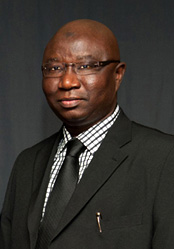
Firmly established in the Montreal region since 2009, with approximately fifty collaborators offering innovative expertise, growing revenue, and more than 967 beneficiaries across 16 countries, Afro-Médiation Inc. is currently a major player in the training industry and technological development strategies. While some may view the African continent with pessimism, he sees it through a much brighter lens. Without sugarcoating the facts, we sat down with the bold and versatile founder of Afro-Médiation Inc., a businessman who truly earns his recognition. Boubakar Traoré, in his fifties, is a distinguished promoter of North-South interests. He shares his story.
What are the true foundations behind the creation of Afro-Médiation Inc.?
The creation of Afro-Médiation Inc. is based on the promotion, sharing, and development of knowledge in spheres that are still untapped in Africa, including training, education, socio-economic exchanges, science, and events.
Could you list some of your achievements?
Our goal is not to confusingly accumulate acronyms and anecdotes, let alone create unnecessary media hype. Instead, we want to take concrete actions that speak for themselves. That said, we have contributed to and participated in several meetings of international influence, including the summit on Agriculture and Fisheries, the conference on the need for support and funding for technological innovations, the International Conference on Partnership and Sustainable Development, and the role of La Francophonie in new global governance. Soon, we will participate in the 5th World Forum on Human Rights to demonstrate our commitment to humanity and to Africa in particular. To date, 967 people have benefited from our services across 16 countries, in addition to the successful partnerships fostered between economic operators.
Several renowned experts have joined your ideology. What are your recruitment criteria?
There is no standard prescribed method for recruitment, other than possessing skills compatible with our expectations. To date, in my view, none of our experts have had a cloud of anonymity over their abilities or their professional and personal identity.
What do you do with experts who are incompetent or who do not meet your societal expectations?
There are no "incompetents" in this field, only those who are less compatible with our clientele. In this sense, measures are in place to trigger an alarm if anomalies are detected regarding ethics or aptitude. But so far, satisfaction has always crowned all our actions.
Being far from Africa, what motivates you in such an endeavor—one that, according to your close circles, even disrupts your sleep?
This motivation is explained, on one hand, by the inability of African authorities to provide innovative services to their people and, on the other hand, by the low awareness of the people regarding what is rightfully theirs. In 2013, this helplessness can only be equated to manifest bad faith.
How do you assess your mission today? What are your main sources of pride?
"I have often encountered difficulties but rarely failures"
I have often encountered difficulties but rarely failures, and I view all obstacles as leverage points. With professional flexibility and effort, we work to achieve our sought-after goals: establishing the foundations for future generations. All that remains is to develop a performance model. With the full involvement of motivated African collaborators, we work tirelessly in line with our strategic objectives.
Can you tell us about your background?
"I am not a specialist in colorful phrases that lack authenticity"
To put it plainly, I am among those who have learned more by doing. This may seem like an incorrect argument in this century, but it is fundamentally logical to me. I am not a specialist in colorful phrases that lack authenticity and logic; I am, rather, a seasoned worker. Even if the "background" factor seems to take center stage, you will agree that the majority of great revolutions are more concrete than intellectual. I often speak less about intellectual level because of my adherence to agreements that reward the ambitious. The principle of intellectual honesty is so rich that it should not be limited to degrees obtained here and there.
What are your impressions of African sovereignty, which has been so widely advocated for some time?
It remains the least of my concerns. I would rather promote true African integration, the end of absenteeism and tardiness at work, the rewarding of work rather than the worker, the improvement of our systems, and the establishment of order in our priorities. If this order is not followed, this sovereignty will remain a fallacious legacy, and we risk witnessing the helpless collapse of our Titanic. One does not become sovereign simply by displaying so-called intellectual skills where they are not needed.
What are your sources of inspiration and motivation?
"My main source of inspiration remains my faith"
Even though we have reached a level where humans seem to have surpassed the angelic and prophetic stages to rival God, my main source of inspiration remains my faith. As for my motivation, it is a reflection of the many obstacles that litter the lives of rising generations, as well as the frustrations experienced directly or indirectly. Regardless, I remain an optimist of will and faith. I always tell myself that to reach the limits of the possible, one must dream the impossible.
What will your specific future missions be?
They will focus on creating local entrepreneurial capacities for the development of individual and collective skills, ensuring responsible and independent management, and making our company a platform of excellence for promoting the balance between entrepreneurship and institutional sectors.
What is your analysis of political governance in Africa?
"Governments only think of the people when it comes to sharing electoral treats"
I believe that governments only cooperate with the people to hand out electoral treats. These are behaviors that cause delays. I ask political figures, at whatever level, to equip themselves with a personal information network rather than a group of apologists. This network should serve as eyes and ears within the administrative machinery and the population. This position requires the firmness to denounce issues and provide updates that will serve the proper functioning and success of the major reforms necessary in the life of all nations.
What is the final message that is close to your heart?
"Africans must stop being universal receivers"
I remain convinced that Africa will not move forward if African brothers and sisters do not stop marginalizing themselves and being complacent in this hypocritical heritage called sovereignty. From leaders to the people, we must learn lessons from successes, development models, and especially failures. We must cultivate a spirit of self-esteem and gradually stop being universal receivers. We must prove that beyond dancing, we know how to do other things. A leader cannot know the educational and medical realities of his country when all his children start elementary school in the West and their headaches are treated far from his country. We must fight energetically against corruption, the embezzlement of public funds, and put an end to dictatorship and administrative red tape... Youth is the future of the continent. Political leaders must not be the gravediggers of this youth. Instead, they must listen to them and develop opportunities to increase their employability so that they do not feel the State is the only cash cow.
Interview conducted by Julie FREEMAN
Collaboration: Arsène Flavien BATIONO
A training, event or partnership project?
Let’s talk about your needs. Our team will get back to you quickly.