

Arsène Flavien Bationo, promoter of JESTIC: "Our initiative aims to showcase national expertise in Information and Communication Sciences and Technologies"
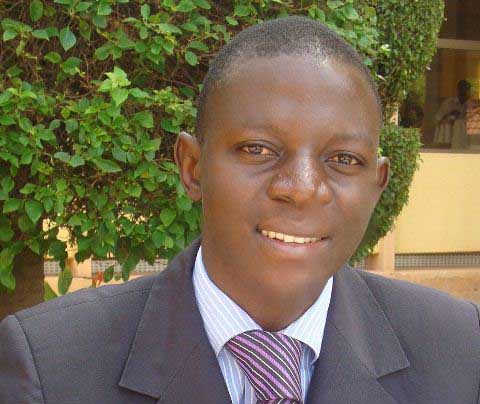
Arsène Flavien Bationo has made the promotion of information and communication sciences and technologies his passion. President of the Group for Study and Research in Information and Communication Sciences and Technologies (GERSTIC), Bationo is also the promoter of the Information and Communication Sciences and Technologies Study Days (JESTIC), the first edition of which is held on November 8 and 9, 2013, in Ouagadougou. We spoke with the communication and advocacy officer of OCADES Caritas Burkina primarily about the ins and outs of these inaugural JESTIC sessions and the progress of the preparations. Interview.
On November 8 and 9, 2013, in Ouagadougou, you are organizing the first study days in information and communication sciences and technologies. What justifies this initiative?
The Information and Communication Sciences and Technologies Study Days (JESTIC) are, as you know, organized by the Group for Study and Research in Information and Communication Sciences and Technologies (GERSTIC), whose founding ambition is to promote information and communication sciences and technologies as tools for development. To this end, we conduct structural reflections and organize a number of activities such as studies and research, the publication of scientific articles and books, training sessions, conferences, etc. JESTIC is a continuation of our activities. They are carried out in accordance with our 2011-2015 strategic plan. Information and communication are anthropological experiences. As such, they must be understood from a scientific perspective to judiciously exploit their opportunities. Burkina Faso must not remain on the sidelines of the communication society. It was therefore appropriate for us to create a framework for reflection and foresight on information and communication sciences and technologies to enable Burkina Faso to better meet the challenges it faces in terms of development. When working within a logic of sustainable development, information and communication are essential levers. JESTIC was initiated to provide suitable solutions for the development of Burkina Faso through information and communication sciences and technologies. It also aims to stimulate research and scientific production in this field, promote works produced by GERSTIC, and showcase national expertise.
"New Media and Democracy in Burkina Faso: Opportunities and Paradoxes" is the theme of these days. Why was this theme chosen?
Current technological developments are giving rise to new concepts: cyber-society, digital or virtual society, Internet city, cyber-democracy, electronic democracy... The digital space has grown at a lightning pace in recent years. The web has become the essential key to this cyber-society. Technological innovations are constantly and significantly modifying relationships between individuals by opening up numerous possibilities in terms of communication, but also more broadly, individual freedom, privacy, and social relations. Democracy is therefore directly concerned by the uses of electronics. A digital agora is emerging both in Burkina Faso and globally. This transformation of democracy, of what Jürgen Habermas calls the "public sphere," deserves to be analyzed thoroughly. Can new media, particularly Facebook and Twitter, be considered tools for democratization? What are the limits and dangers of these information catalysts? Is citizen mobilization possible today without the use of these technologies? How do we govern in this new context where citizens are no longer satisfied with top-down decisions? These are all concerns that justify the choice of this theme: "New Media and Democracy in Burkina Faso: Opportunities and Paradoxes." Following the diagnosis, our goal will be to propose solutions to optimize the contribution of new media in strengthening democracy in Burkina Faso.
Concretely, what is the program for this first edition of JESTIC?
In this new space we inhabit, citizens contribute to the emergence of collective intelligence. During JESTIC, we will specifically analyze this new form of citizen participation. This will be done through scientific workshops, training sessions, conferences, an exhibition, and the book signing of "Communication and Project Management: The Strategic Conduct of Social Change." Regarding the presentations stricto sensu, six themes in total will be addressed:
- "New Media and Democracy in Burkina Faso: Opportunities and Paradoxes" (introductory presentation)
- "Social Networks in Crises in Burkina Faso: Amplifying Elements?"
- "The Challenges of Media Literacy in the All-Digital Era"
- "New Media: What Challenges for Governance?"
- "Social Networks, Freedom of Expression, and E-reputation"
- "Burkinabè Media and the Issue of Social Networks: What Challenges? What Perspectives?" A scientific book on the theme will be published after JESTIC.
Tell us a bit about the speakers expected at these sessions.
The speakers, as well as the moderators for JESTIC 2013, are all information and communication professionals. They also conduct research in the field of information and communication sciences and technologies. Since communication is cross-disciplinary, they also possess proven expertise in law, sociology, psychology, media management, political science... Communication is a social and societal phenomenon, an "integrated whole" according to Yves Winkin. Given this specificity, we have brought together various skills to best decipher the issue of new media within a democratic context. The JESTIC strategic orientation committee worked extensively with a pool of experts consisting of Prof. Serge Théophile BALIMA, Dr. Firmin GOUBA, and Dr. Cyriaque PARE. Their contributions were very important in organizing JESTIC.
How many participants are you expecting?
As of November 2, 2013, the organizing committee held a meeting to provide a progress report. We had over 300 registered participants. There is strong enthusiasm for JESTIC, as you can see on social media. This is a clear sign that the issue of new media and, beyond that, information and communication sciences and technologies, interests public opinion. What is truly interesting is that we have participants from diverse backgrounds: information and communication professionals, politicians, researchers, civil society organizations, students, and ordinary citizens... This is very important because the theme requires inclusive reflection. There are, therefore, great debates in prospect, and this can only nurture and strengthen Burkinabè democracy.
As of today, can we say everything is ready organizationally?
The organizing committee, composed of about thirty members, was established on September 21, 2013, with guidelines and a specific set of responsibilities. Strategies were developed and specific actions implemented. The progress report drawn up on November 2, 2013, is highly satisfactory. When we launched the idea, we expected about a hundred participants. Today, we have over 300 registered. This shows the challenges we must meet. The various commissions have already integrated this parameter. Serenity and determination to succeed are the order of the day at all levels. These days are under the high patronage of Prof. Serge Théophile BALIMA, researcher and Director of the Panafrican Institute for Study and Research on Media, Information, and Communication (IPERMIC). This is an opportunity for me to express GERSTIC's gratitude to him for his moral and intellectual endorsement and for all the support he has provided to the Group since its creation in 2010. We also extend our warm thanks and encouragement to all members of the organizing committee for their dedication. Thank you to all the figures and institutions who received us, the partners who trusted us, and the Burkinabè media as a whole who immediately embraced the initiative. The public can be reassured. Optimal conditions are met for everything to go well on November 9 starting at 8:00 AM at CENASA.
Are you facing any difficulties?
Obviously, organizing such an event is neither a simple task nor a long, quiet river. We sometimes encounter minor difficulties. But having decided to work according to the principles of collegiality and co-responsibility, we quickly find judicious solutions to everyone's satisfaction. We have faith in what we are doing. This constitutes a kind of travel companion for us. Naturally, we are open to any kind of useful partnership that would help us achieve our goals effectively and efficiently.
A message for the Burkinabè public?
We are at a decisive turning point in our democratic process. No one should be a passive spectator. New media give us great opportunities to participate in improving governance in our country. But one must be fully aware of the modalities and risks. JESTIC is an appropriate framework to learn about this reality. New media are presented as a golden age of democracy, a new eldorado of freedom. But while they should be used, they must not be abused, because you have a digital personality to build and personal branding to preserve through Web 2.0. JESTIC provides the opportunity to discuss this. They are simultaneously a framework for questioning political accountability. Citizens are increasingly demanding. On forums and social networks, they criticize, overwhelm, debunk, etc. You may have seen the internet users' reactions to the government communication regarding the solar eclipse of November 3, 2013, to name just that example. With new media, governance is strongly challenged. At the individual level, faced with technological development, it is a matter of neither falling into a sort of blissful devotion nor sinking into excessive worry, but remaining lucid and determined. These are the stakes that every Burkinabè deserves to understand to better contribute to the country's development. Information and communication professionals, researchers, politicians, civil society organizations, students, men and women of Burkina Faso—not a moment's hesitation. Simply come one and all to CENASA on November 9 at 8:00 AM for this first edition of JESTIC, which we intend to make a recurring event with God's help and everyone's support.
Interview conducted by Grégoire B. BAZIE
Lefaso.net
A training, event or partnership project?
Let’s talk about your needs. Our team will get back to you quickly.